Service Dog Awareness Month: Celebrating Life-Changing Partnerships
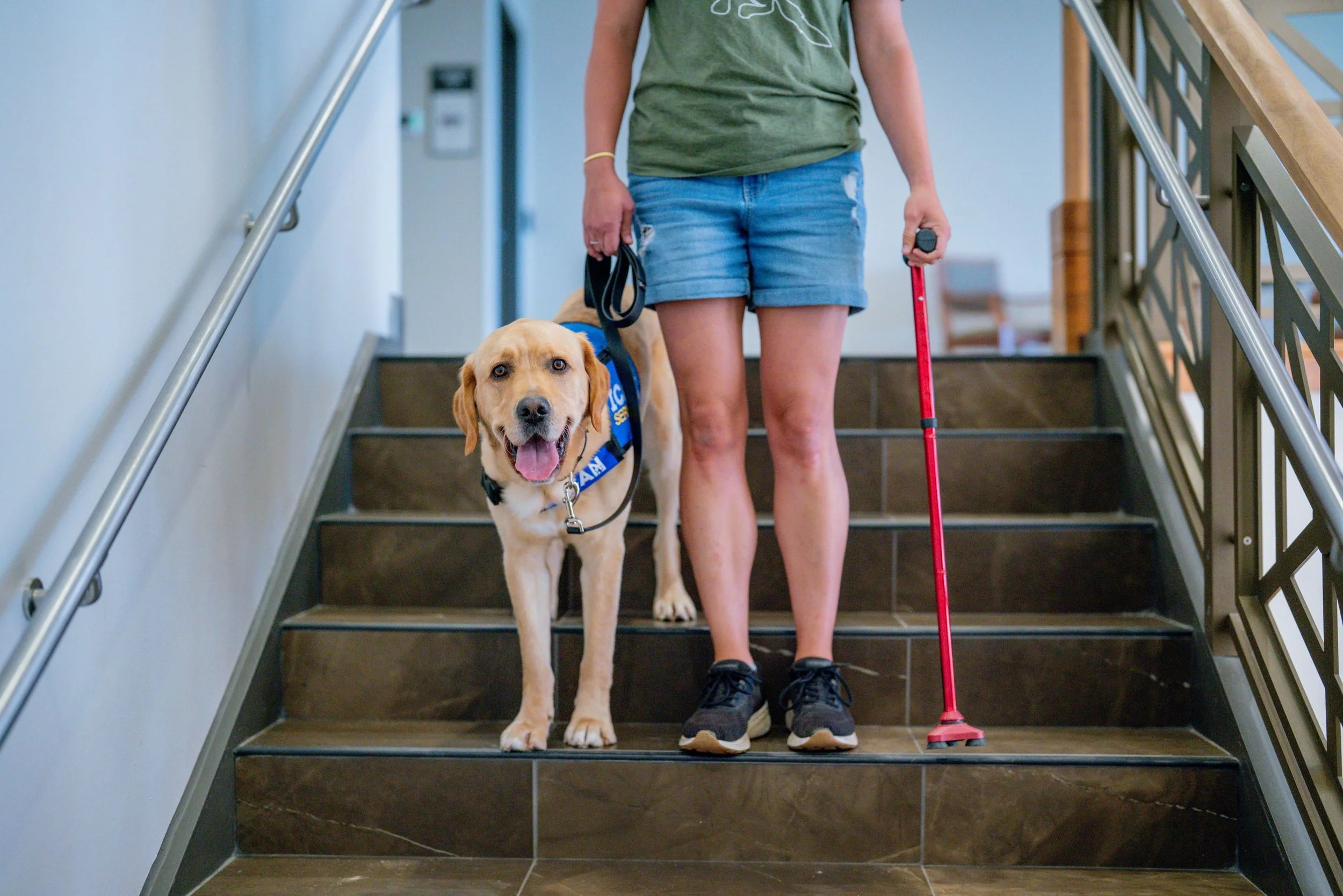
Every September, Service Dog Awareness Month shines a spotlight on the extraordinary role service dogs play in helping people live more independent, confident, and fulfilling lives. It is a time to recognize the dedication of service dog teams, educate the public about proper service dog etiquette, and raise awareness of the ongoing need for highly trained service dogs in our communities.
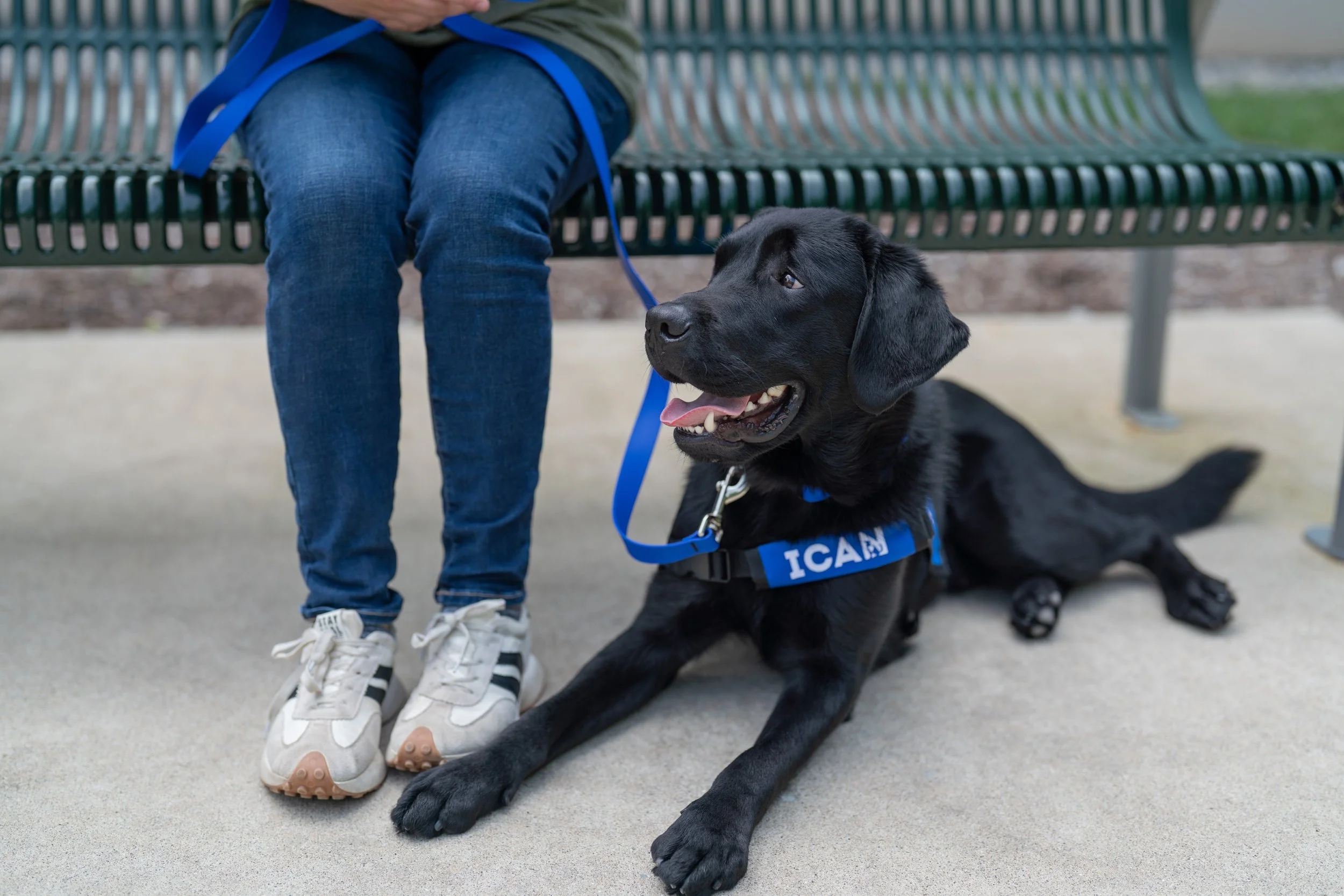
At ICAN, Service Dog Awareness Month is a powerful reminder of why we do what we do. Every service dog we place changes a life, creating opportunities for greater independence, connection, and confidence. It’s also a time to remember the many people still waiting for that life-changing partnership.
What Is a Service Dog?
A service dog is individually trained to perform specific tasks that mitigate a person's disability. Unlike pets or emotional support animals, service dogs are working partners that provide practical assistance, helping their partners navigate daily life with greater independence and confidence.
Through extensive training and a strong partnership with their client, service dogs become much more than companions. They are trusted teammates who increase safety, accessibility, and quality of life.
The Types of Service Dogs ICAN Provides:
ICAN currently trains and places two types of service dogs: Mobility Service Dogs and Psychiatric Service Dogs.
Mobility Service Dogs
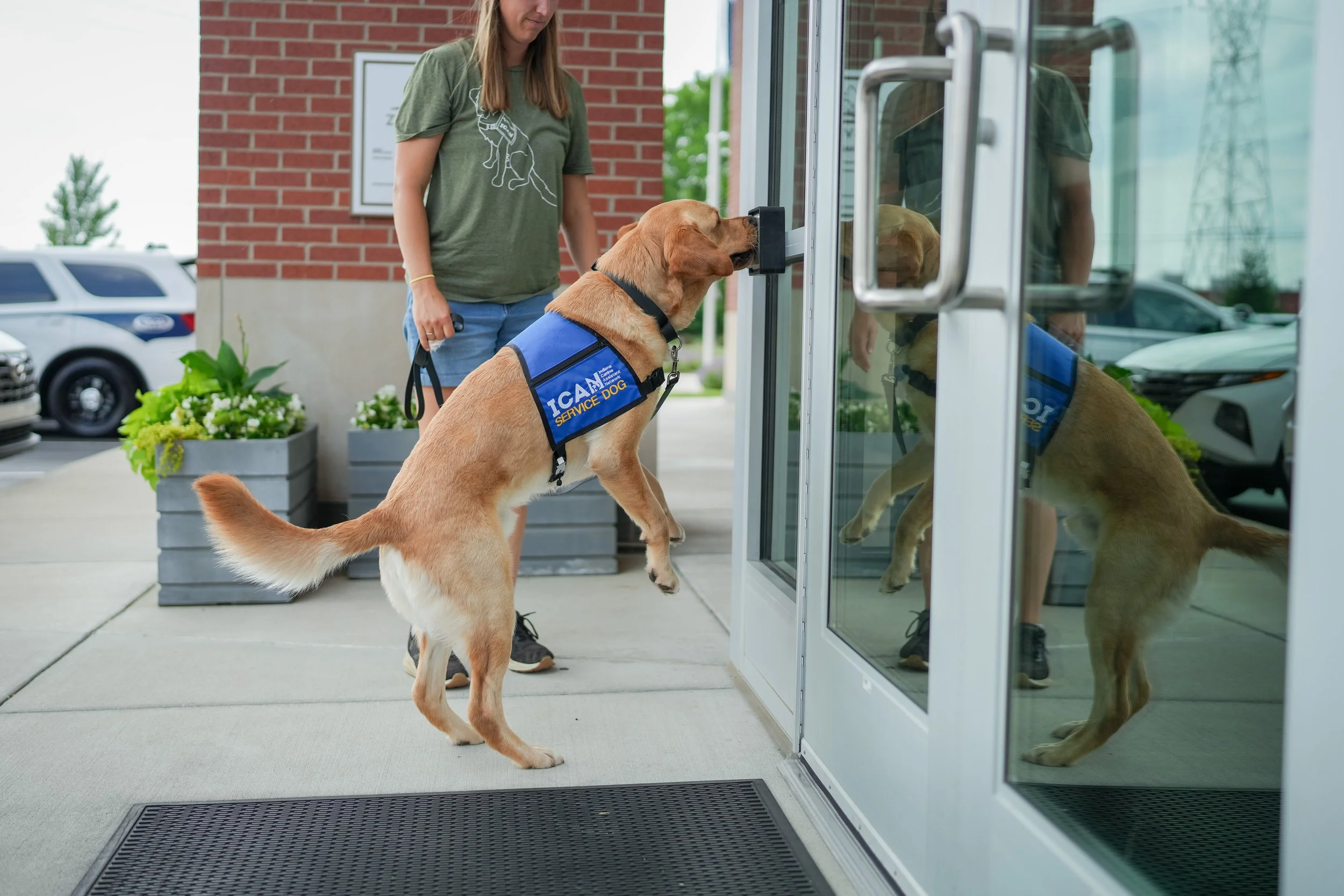
Mobility service dogs assist individuals with physical disabilities by performing tasks that support daily independence. Depending on an individual's needs, these dogs may be trained to:
Retrieve dropped items
Open and close doors
Turn lights on and off
Assist with carrying items
Provide stability and balance support
Help with wheelchair-related tasks
These highly skilled dogs enable their partners to accomplish everyday activities with greater ease and reduce reliance on others for assistance.
Psychiatric Service Dogs
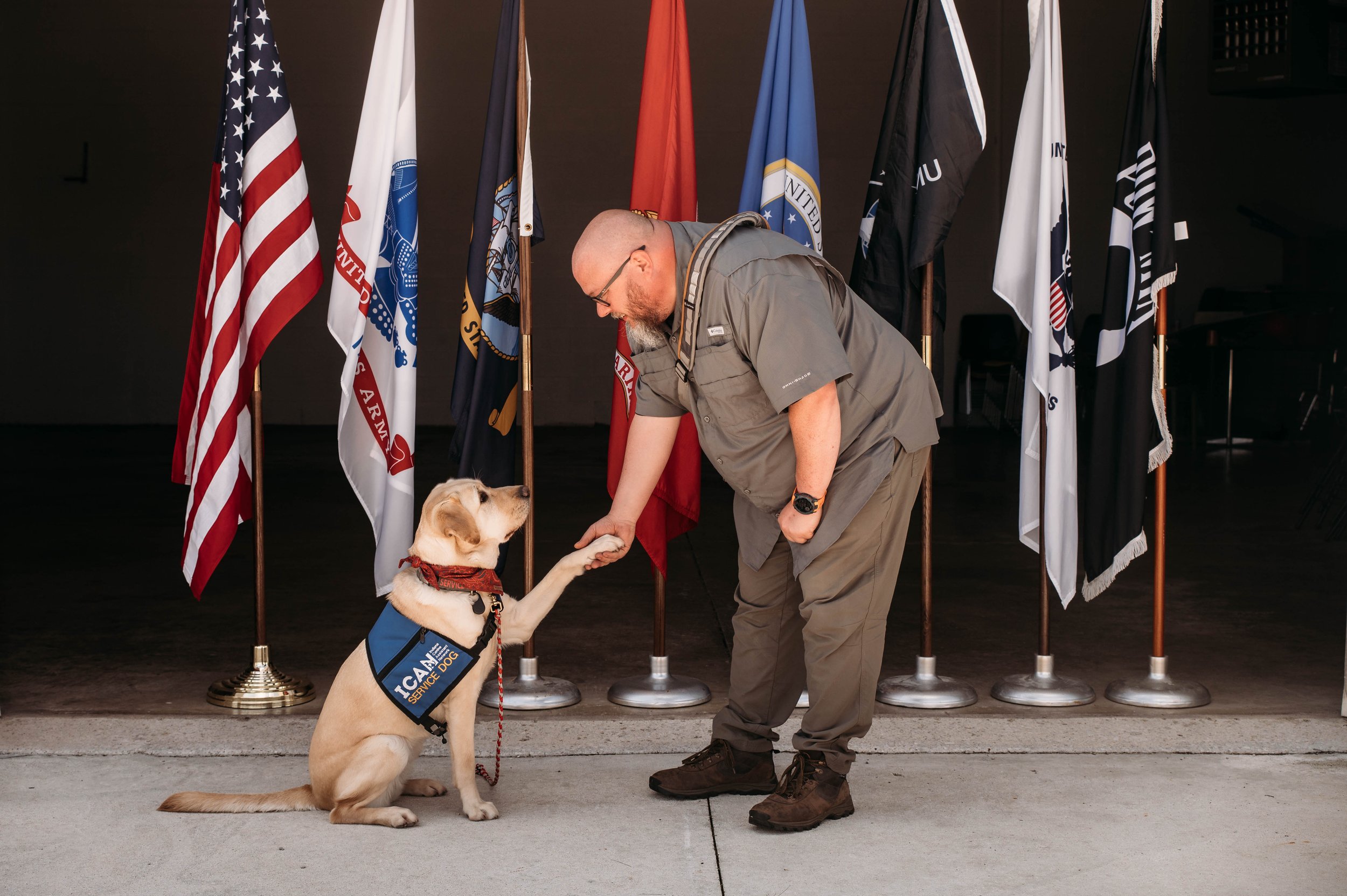
ICAN psychiatric service dogs are trained to assist military Veterans living with psychiatric disabilities such as post-traumatic stress disorder (PTSD), anxiety disorders, and other service-related trauma.
Tasks may include:
Interrupting anxiety or panic episodes
Providing grounding during moments of distress
Creating personal space in crowded environments
Reminding clients to take medication
Waking clients from nightmares
Assisting with emotional regulation through trained task work
By performing these individualized tasks, ICAN psychiatric service dogs help their partners navigate daily challenges and participate more fully in work, school, family, and community life.
Facility Dogs: Important Working Dogs Making a Lasting Impact
While facility dogs are not considered service dogs, they are incredibly important working dogs that make a meaningful difference in the lives of many people every day.
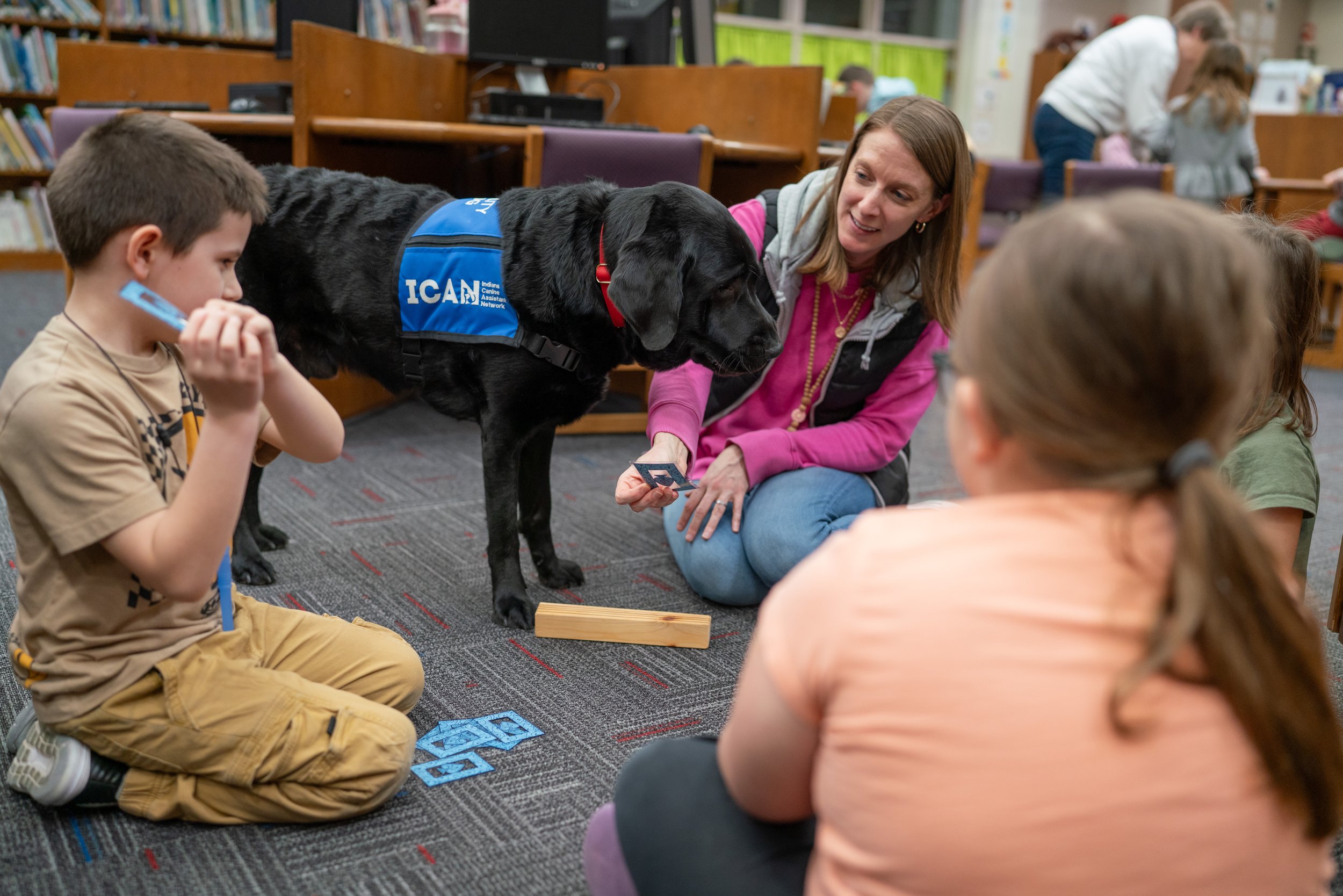
ICAN facility dogs are trained to work alongside professionals who incorporate the dog’s training into the care of their clients, patients, or students. These highly skilled dogs serve in environments such as schools, hospitals, courthouses, counseling centers, rehabilitation facilities, and other community organizations.
facility dogs help create welcoming, supportive environments and can assist professionals in achieving therapeutic, educational, and emotional wellness goals. Their presence can reduce stress, encourage engagement, provide comfort during difficult situations, and help individuals feel safer and more at ease.
Although facility dogs are task-trained working dogs, they are not considered service dogs under the Americans with Act (ADA). Unlike service dogs, which are trained to perform disability-related tasks for one individual and have public access rights, facility Dogs are trained to work within their designated place of employment. Their work is tied to the organization and the populations they serve, and they do not have public access rights outside of their workplace.
Why Service Dog Awareness Month Matters
Service Dog Awareness Month is about more than celebration. It is an opportunity to educate the public about the responsibilities of service dog teams and the challenges they may face.
Awareness helps people understand:
The difference between service dogs, facility dogs, therapy dogs, and pets
The extensive training required to prepare a service dog for placement
The laws and rights that allow a disabled person to be accompanied by their service dog
The growing need for access to highly trained service dogs
Education creates understanding, and understanding creates more inclusive communities where service dog teams can thrive.
For ICAN, this month is also a reminder that the need for service dogs continues to grow. More than 50 individuals are currently waiting for an ICAN service dog, eager for the increased independence, safety, and confidence these partnerships provide. By raising awareness, advocating for accessibility, and supporting service dog organizations, we can help ensure more people receive the assistance they need to live fuller, more independent lives.
How You Can Support ICAN During Service Dog Awareness Month
There are many ways you can make a difference this September:
Make a Donation: Each ICAN service dog requires extensive training, care, and support, with costs exceeding $30,000 per dog. Financial contributions help ensure more individuals can receive a life-changing service dog and reduce the wait for those currently hoping to be matched with a canine partner.
Become a Volunteer: ICAN volunteers play a crucial role in preparing dogs for their future careers. From puppy raising to event support, volunteers help make our mission possible and directly contribute to the success of future service dog and facility Dog teams.
Help Spread Awareness: Sharing ICAN's mission on social media, supporting our outreach efforts, and educating others about service dogs and facility dogs helps expand awareness and support for those who benefit from these remarkable canine partners.
Advocate for Working Dog Teams: Being informed about service dog etiquette and helping others understand the important work performed by service dogs and facility dogs can create more inclusive, supportive communities for everyone they serve.
Service Dog Awareness Month is more than a celebration. It is a call to recognize the value of working dogs, support people with disabilities, and invest in programs that strengthen our communities.
This September, you can make a difference. Donate, volunteer, share our mission, and help spread awareness about the important work these exceptional dogs perform every day. Together, we can ensure that more lives are changed through the power of the human-canine bond.