Bridging healing and hope
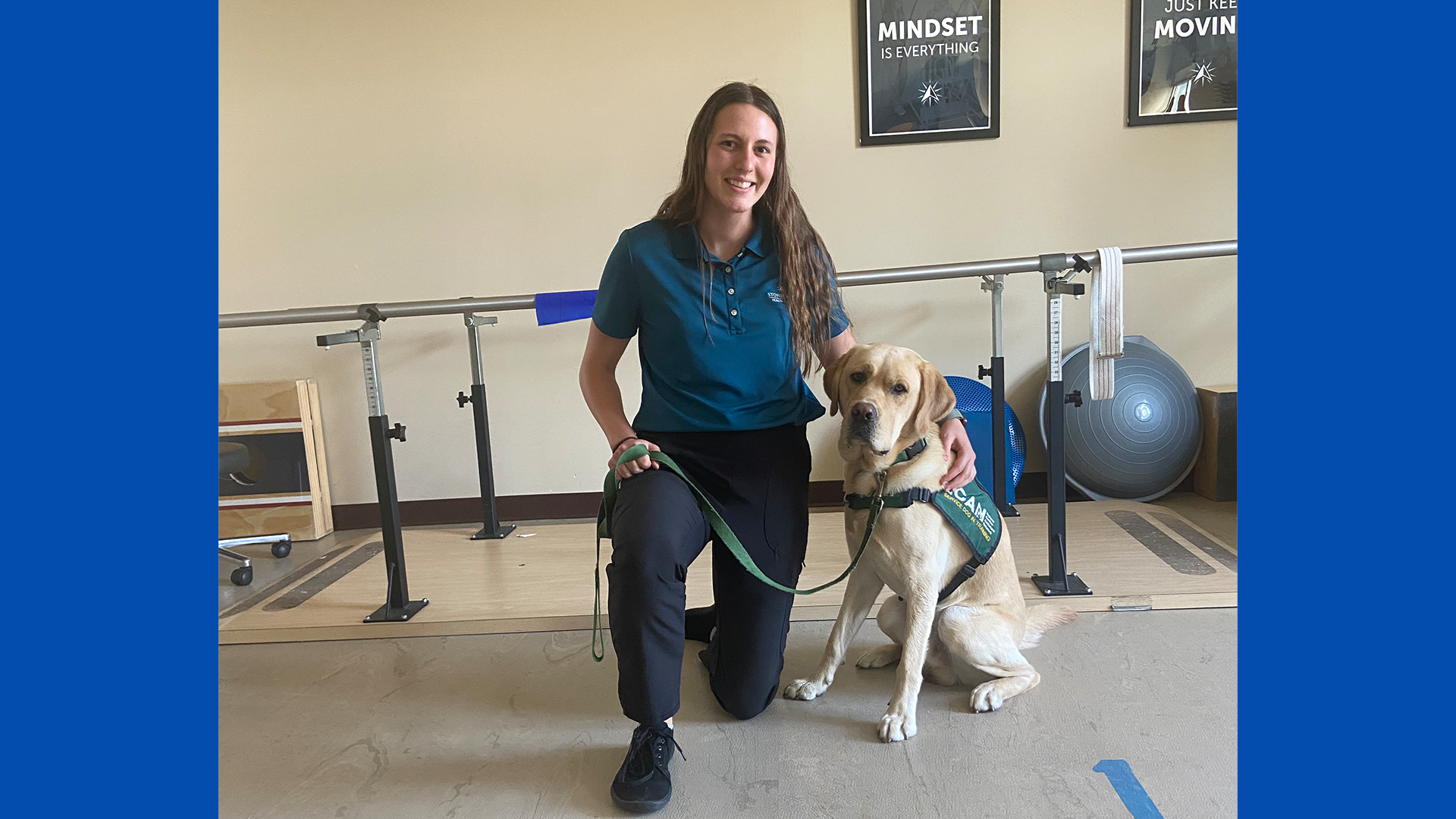
Volunteer Emma Branson with ICAN Tim.
At just 22 years old, Emma Branson is already making a powerful impact as an Indiana Canine Assistant Network (ICAN) volunteer. What began as a chance encounter at work quickly turned into a meaningful way for her to make a difference—both in the lives of future service dogs and the patients she serves each day.
Originally from Arizona, Emma began her career as a travel physical therapist assistant before settling in Bloomington, Indiana, where she now works full‑time at a rehabilitation hospital. Her role focuses on helping geriatric patients regain strength and independence—a job that requires patience, compassion, and creativity.
Emma grew up with dogs and has always loved having one in her life. When her career required frequent travel, she had to leave her own dog at home with her parents—something she admits was difficult.
Everything changed when one of Emma’s patients arrived at the rehab hospital accompanied by an ICAN service dog.
“Of course, this really piqued my interest because I was dog-deprived!” she shared.
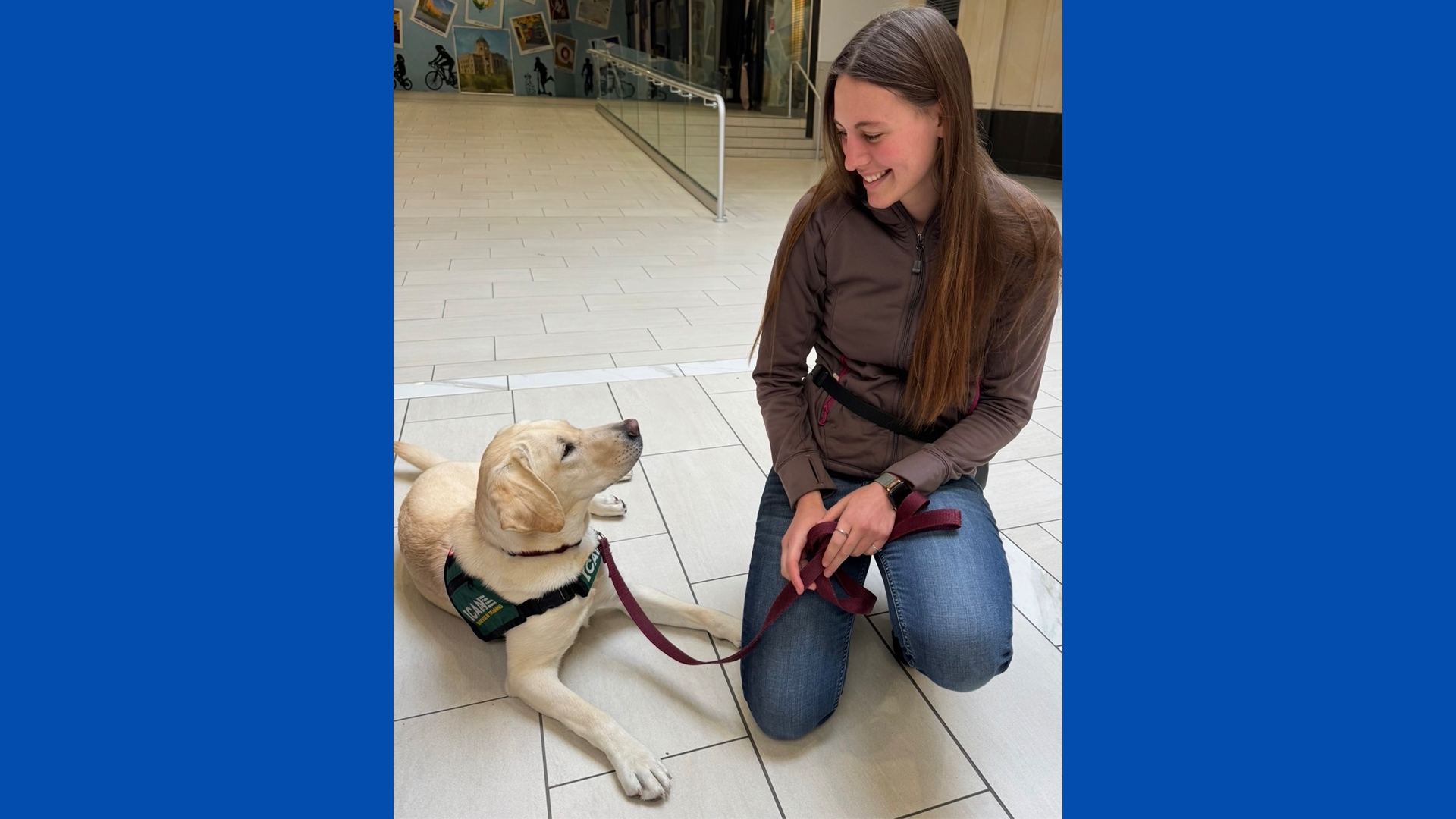
Emma with ICAN Gracie.
Curious, she spoke with the patient and his wife, then went home and immediately reached out to get involved. In November 2024, Emma officially started her journey as an ICAN volunteer.
“It worked out perfectly,” she explained. “With my busy schedule, I wouldn’t be able to take care of my own pet dog. Volunteering with ICAN lets me have dogs in my life without the full responsibility of owning one.”
Emma began with community engagement events and litter sitting, and she was paired with an experienced mentor to help guide her through the process. Through this mentorship, she discovered an interest in furloughing—temporarily housing a service dog in training to reinforce the skills they’ve been learning with their incarcerated handler.
Now, Emma has furloughed four dogs and found a unique way to integrate them into her daily routine. She regularly brings the dogs with her to work at nursing and rehabilitation facilities, which benefits both the dogs and the patients.
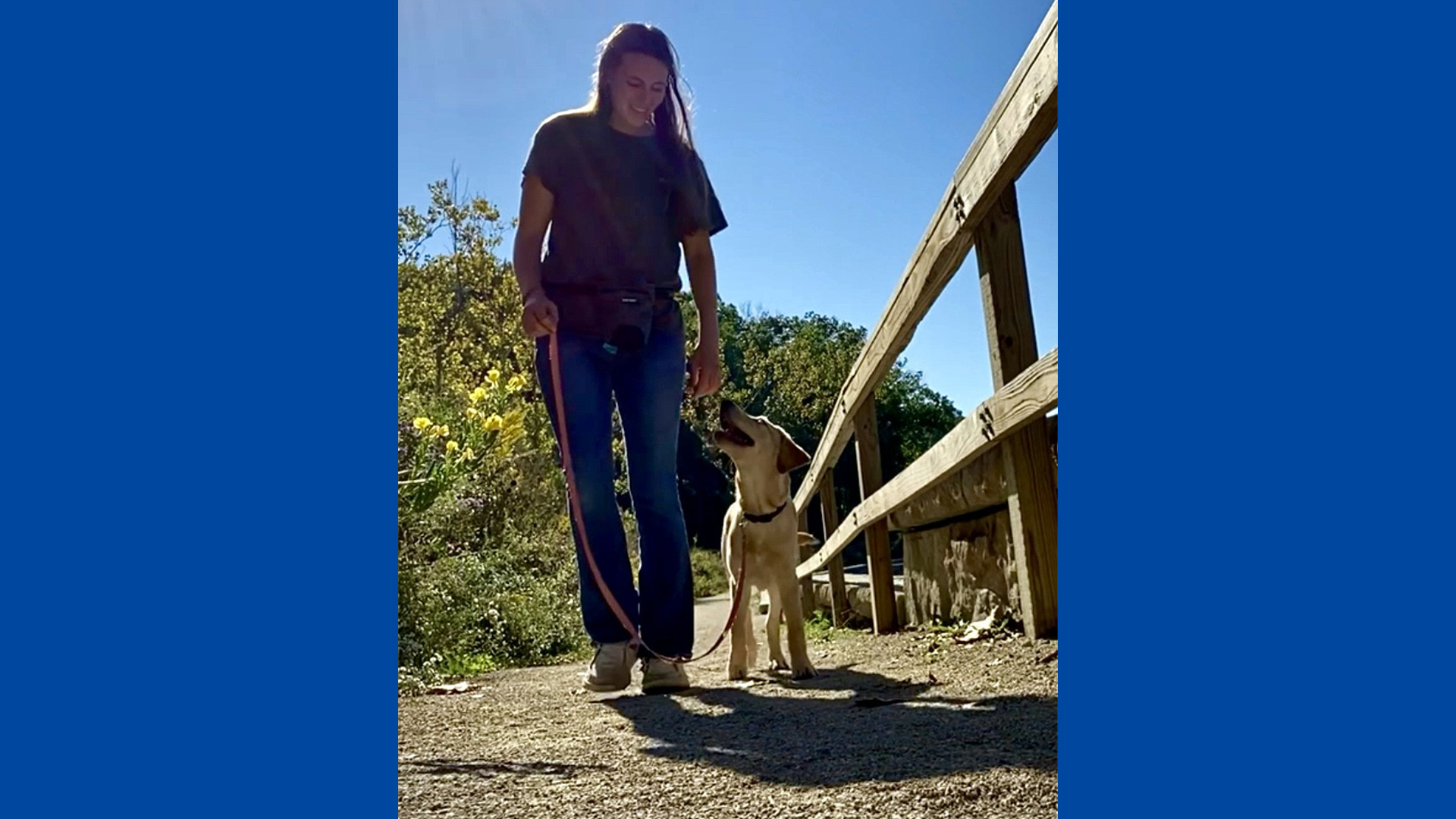
Emma with ICAN Donut.
For the dogs, it’s valuable training. They learn to be calm and focused around wheelchairs, walkers, exercise equipment, and the often unpredictable environment of a rehab gym. Patients tossing balls or using exercise machines provide real‑world distractions that help prepare the dogs for future service work.
For Emma’s patients, the impact is just as meaningful. When she enters a patient’s room to bring them to therapy, the presence of a dog can change everything.
“Their faces just light up,” she said. “It can be really motivating.”
For patients who are hesitant or not interested in participating in therapy, the dogs offer encouragement. A greeting with the ICAN dog becomes an opportunity for emotional connection—and a chance for the dogs to practice calm, polite interactions.
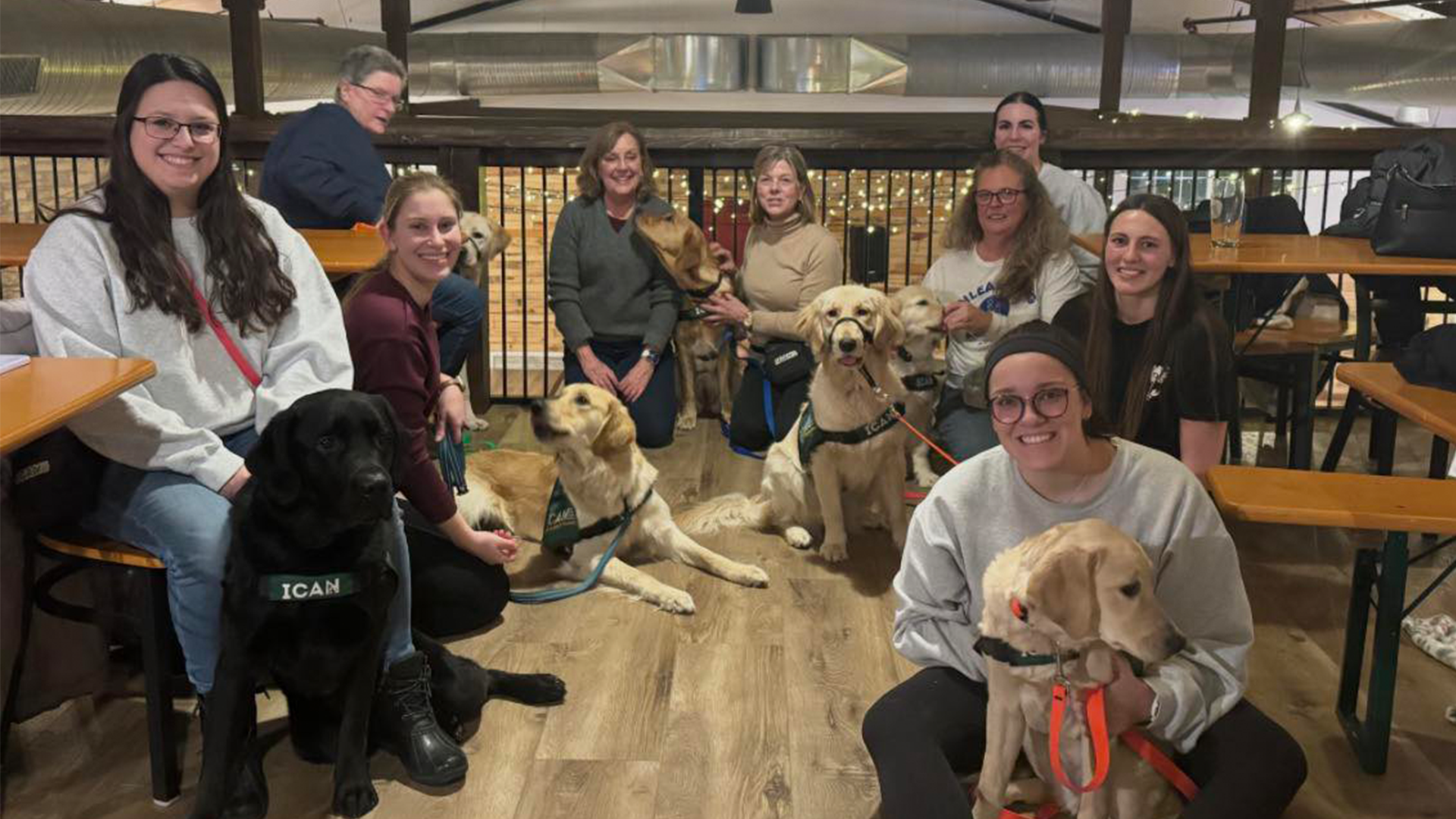
Emma (second to the right) on an ICAN outing with other volunteers at Urban Apples.
Outside of work, Emma has also created countless memorable experiences through outings with other ICAN volunteers and their service dogs in training. Some of her favorites include a group trip to Urban Apples, where eight dogs and volunteers explored and listened to live music, and a Christmas movie showing at Butler University, where the dogs practiced settling in a movie theater.
“The ICAN community is incredible. There’s always someone around to lend a hand whenever I need it. Getting to be around a bunch of other dog lovers? You can’t go wrong with that,” she said.
Whether it’s a patient finding the motivation to participate in therapy or a service dog in training learning to stay calm in a busy rehabilitation gym, those small, everyday moments add up to something life‑changing.
Surrounded by wagging tails, growing confidence, and a supportive community, Emma has found a way to bring ICAN’s mission of transforming lives into her daily routine.
If you’d like to help unleash possibilities like Emma, contact ICAN Volunteer and Education Manager Julie Mathias at juliem@icandog.org.